
SIP trunk provider in the United Kingdom
SIP trunking service allows you to connect your on-premises or third-party PBX to our hosted PBX system.
Take full advantage of cloud telephony benefits: advanced call routing features and a more cost-effective solution.
Take full advantage of cloud telephony benefits: advanced call routing features and a more cost-effective solution.
Integration between on-premises and hosted PBX
Automated failover in the event of internet outages
Compatible with 3CX and other systems
SIP aggregation of traffic from multiple VoIP carriers
SIP trunk operation modes
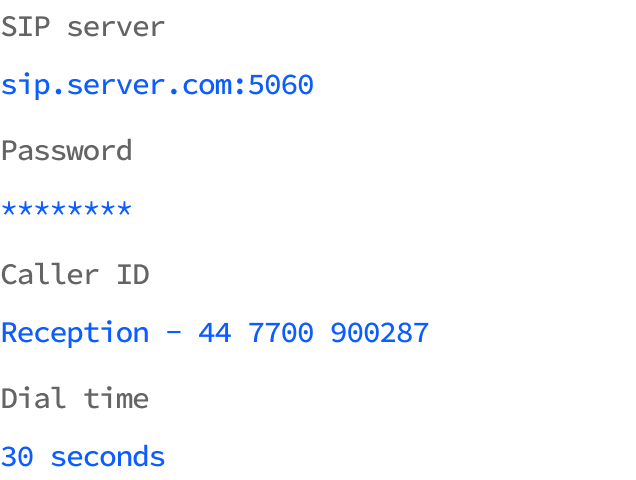
SIP registration
Register your SIP device, softphone, or on-premises system with VoIPline. We support devices such as Yealink phones and software-based phone systems such as 3CX. Make and receive calls both on the public phone network and within the PBX.
URI diversion: route calls to a remote server
Incoming call will be forwarded to the specified SIP URI address.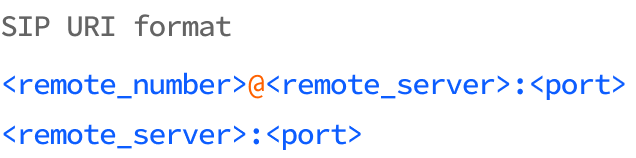

Microsoft Teams gateway
Use a Microsoft Teams account with Direct Routing as the gateway, and configure the SIP trunk call plan and channels for inbound and outbound calls.
Frequently asked questions
What is SIP trunking?
SIP trunking
is a service enabling companies to link their on-premises IP PBX (phone system) directly to an Internet
Telephony Service Provider (ITSP), providing access to services such as inbound phone numbers and
outbound call termination. Essentially, it serves as a modern replacement for traditional PSTN phone lines.
SIP trunking can function via both public internet and private IP networks.
What sets SIP trunking apart from hosted PBX?
SIP trunking and hosted PBX are complementary services rather than direct competitors.
SIP trunking facilitates the connection of your VoIP-compatible on-premises phone system to the cloud, enabling
communication with the outside world.
Hosted PBX,
on the other hand, is already a phone system, operating entirely via the internet. By integrating them, you can
leverage some hosted PBX capabilities alongside SIP trunking, such as providing inbound toll-free numbers or call
recording.
What are the advantages of SIP trunking over PSTN and ISDN?
SIP trunking replaces outdated PSTN and ISDN phone lines by leveraging the internet for voice data transmission.
Key benefits include:
- Lower cost compared to traditional PSTN and ISDN connections.
- Scalability, allowing for easy adjustment of the number of channels or simultaneous calls required.
- Easy relocation: you can use your SIP trunk from any location with internet access.
- Enhanced security features: SIP trunks can be configured to encrypt all call data in transit.
- Support for HD voice codecs for superior audio quality.
What are SIP trunk channels?
A SIP channel facilitates either an incoming or outgoing call, akin to a traditional phone line. Each SIP trunk can
accommodate multiple SIP channels.
How many channels can a SIP trunk support?
The number of channels a SIP trunk can handle depends on your internet connection speed. Most modern connections
can support dozens of channels. For instance, a 10 Mbps connection could sustain approximately 100 simultaneous calls.
What internet speed is required for optimal SIP trunking operation?
This depends on your on-premises PBX and its supported codecs. If your PBX uses G.711 u-law or G.711 A-law, each call
typically requires about 0.08–0.10 Mbps (80–100 kbps) including overhead. Therefore, with a reliable 8 Mbps connection,
you could support approximately 80–100 simultaneous calls.
What happens if my internet goes down?
Even if your internet connection goes down, you'll still be able to receive inbound calls. This is possible by setting
up a call diversion
to external phone numbers. Typically, calls first route to an inbound number and then pass through the SIP trunk.
However, if the SIP trunk is unreachable due to internet unavailability, calls will automatically be redirected
to a configured mobile phone or alternative number.